viroLOGICAL

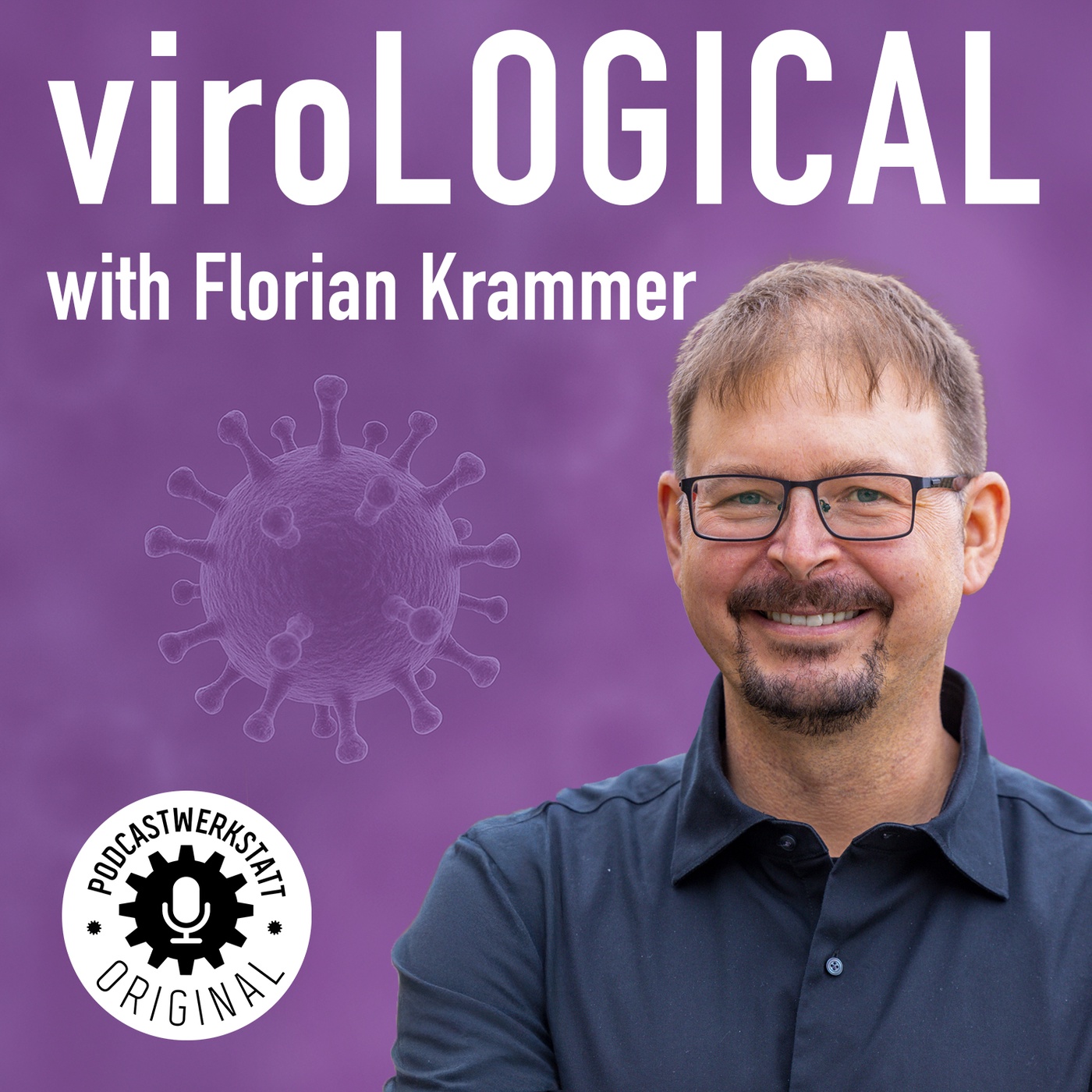
Florian Krammer is a virologist and vaccine developer. In his podcast viroLOGICAL he will talk about viruses on a weekly basis – from historical pandemics to current developments.
A Podcastwerkstatt Original – produced between New York and Vienna.

Photocredit: Medical University of Vienna/feelimage

viroLOGICAL

Latest episodes

#3 – Avian Influenza: From Wild Birds to Humans

#3 – Avian Influenza: From Wild Birds to Humans

38m 6s

Avian influenza, commonly known as bird flu, has become a global concern once again. In this episode, Florian Krammer explains the biology of influenza A viruses, how subtypes like H5N1 are defined by their hemagglutinin and neuraminidase proteins, and why segmented genomes allow these viruses to reassort and evolve. He outlines the difference between low and highly pathogenic avian influenza, the molecular basis of increased virulence, and the historical spread of H5N1 since the late 1990s.

#2 – Measles: How Vaccine Gaps Lead to Outbreaks

#2 – Measles: How Vaccine Gaps Lead to Outbreaks

28m 0s

In this episode of viroLOGICAL, Florian Krammer explains the measles virus, one of the most contagious human pathogens known. He discusses the structure and transmission of the virus, its airborne spread, and why its very high R number makes outbreaks difficult to control.

#1 – Rabies Virus: One of the Deadliest Infections

#1 – Rabies Virus: One of the Deadliest Infections

20m 43s

In this episode of viroLOGICAL, Florian Krammer explains rabies, one of the deadliest infectious diseases known. He describes what the rabies virus is, how it is transmitted mainly through bites and scratches, and why symptoms almost always lead to death once they appear.

#0 – What Are Viruses?

#0 – What Are Viruses?

45m 14s

In the first episode of viroLOGICAL, Florian Krammer takes a fundamental look at viruses: What are viruses and why are they not considered living organisms? He explains how viruses replicate inside host cells, how they were first discovered, and why their size, shape and genetic makeup can differ so widely.